
Ũtungatĩ wa tĩri: A Decolonial call from my grandmother
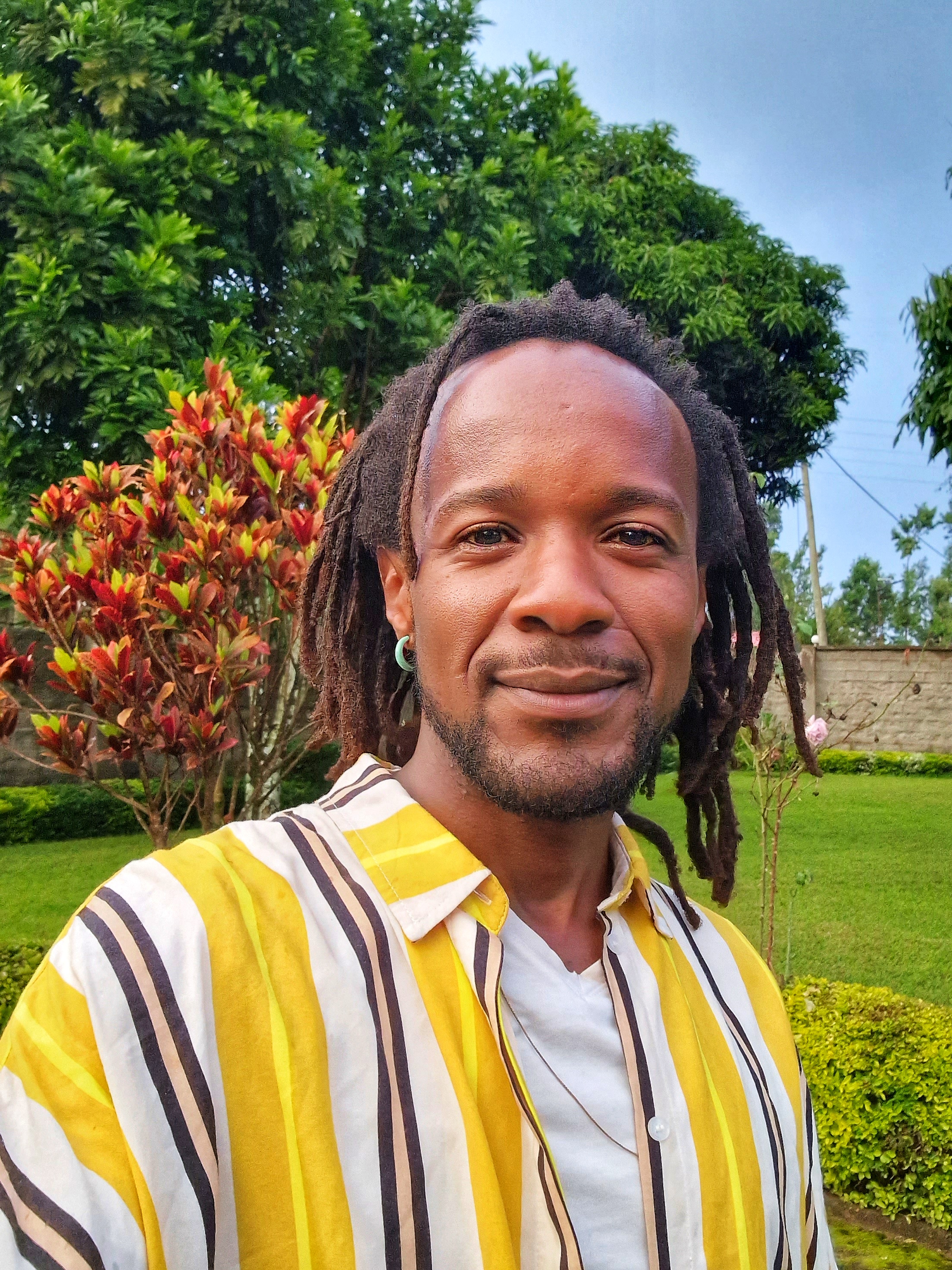
TBP Contributor: Njerũ Njoka Format: Mixed Media | 22 - minute read

Tue twĩ na mathĩna mengi – Us, we’re in trouble.
It is 2026, our country Kenya is gripped in crises, and cries are heard across the land. The economy is in decline, we’re crying out about a lack of jobs and employment opportunities. We can’t afford education, healthcare or fertilizers, we can’t afford to build homes or nourish family. Our home and communities are growing divided.
There is a great tear between family members and between generations, between the people who labour and those who insist on owning and leading. Younger generations agitate for change, demanding the better futures they were promised. Meanwhile an authoritarian government pushes young Kenyans to leave the country for better opportunities, insisting that we're still on the way to that better future.
We’re in a time of contradictions, opposing voices and narratives and there is tension across the country ahead of the general elections of 2027, fears over the eruption of violence and if this election can bring the change we hope for and need. Our future feels uncertain as we grapple with how we best move forward and about who makes decisions for the land.

The older is holding their right hand out as they both look in that direction
In Makengi Embu, on the south eastern slopes of Mt Kĩrinyaga, so called Mt. Kenya, a home once teeming with people and the sound of insects, birds and animals, now lies quiet. This is my family home. On my trips home between Kenya and the UK, I share fond childhood memories with my 103 year-old cũcũ (granny) Kairũ. Memories of big gatherings she would host, of me running around as we worked to feed 100 people, sharing meals and of picking coffee with family and community.
Cũcũ Kairũ recounts how in time of great need, every home would call for Ĩrĩma. Ĩrĩma means hill/mountain, and our people live on the slopes of kĩrima Kĩrĩnyaga. Gwitana Ĩrĩma is the indigenous ancestral practice of calling for help to take on the communal tasks and challenges that couldn’t be done without the support of others. The Aembu called an ĩrĩma for farming, harvesting or building a house. The whole community would respond to the call and any fruits of their collective labour shared generously, helping the whole community survive under the ĩrĩma. Through the power of ĩrĩma, we farmed coffee collectively, fed a home of nearly 50, clothed and educated over 30 of my mothers, fathers, aunties and uncles. My heart sinks as cũcũ laments, “rĩu tũconi nĩ twa gũrũkire tũkĩnathiĩ” – “now the little birds took off and flew away”.
As a coffee farming community in Embu, much like the rest of Kenya, we are growing poorer, sicker, and hungrier with each generation. Few now live to 100 and the family/ancestral homes are growing quiet. Our needs grow many, but our hands grow few.
Grappling with this loss, my cũcũ and I have been sharing our experiences with each other, comparing notes on our lives and the land. We have been sharing what has changed in both our lifetimes, about the forces that are driving conflict and tensions in Embu’s families, and what has been causing the little birds to fly away. As I plan for my life and for my own family, I have been seeking the wisdom of she who has been with the land the longest and who has lived and nurtured family and community through times of great crisis before.
What began as a dialogue space between just my cũcũ and me, has slowly grown as our family and extended communities have joined in, adding their voices, growing into a living intergenerational journal, carried in our bodies, stories, recordings, images and growing relationship with the land. Through our exchanges we have been bearing witness to what has happened to our family and to our land, to our unravelling and scattering. In witnessing what has befallen our people, there has risen feelings of betrayal, confusion, rage and deep grief. The witnessing has been painful but necessary, it has helped us diagnose who has been pulling the strings, the wounds we have suffered and name by who’s hand we have suffered them.
In our sharing we’re seeing how we are connected, resolving the contradictions in our knowledge and building consensus and shared narrative. This has helped us unite our voices and actions in our movement to liberate and build better lives for our people. This process has helped us remember how shared our experiences are, and where our power truly comes from. It is bringing us hope and strength in the important work of gũcokanĩrĩria mũciĩ – bringing the home back together, restoring life to the land and inviting the little birds to return.
Our struggles are connected and in Ũtungati wa tĩri – Stewarding the land, I share with you how our family in Embu is engaging in intergenerational dialogue around coffee. Its colonial legacy, how it has sustained us, the deadly impact of growing it, the economics of coffee today, our collective dependence on coffee and what possible futures there are. Through this I want to invite you into the work of examining what a mutually nurturing relationship with the land looks like. The land that sustains us materially and economically. How colonialism, capitalism and patriarchy have ruptured that relationship, and how we centre ancestral and Black feminist wisdom to locate our decolonial movements and restore those relations.
As we face the crises of our times, I bring you a message of hope from the experience and wisdom of cũcũ Kairũ. She has sent me gwitana ĩrĩma – she calls us all to the land, and na kwendana – to have love for one another.
Kwa Mbiriai – Our home
To meet cũcũ Kairũ,I take you to the village of Makengi, Embu. Kwa Mbiriai – the home of Mbiriai (my grandfather) and the home of cũcũ Kairũ. My father’s parents. We’re on the slopes of Kĩrĩma Kĩrĩnyaga - the mountain with glaciers, so called Mt. Kenya. The land here rises and falls in hills and valleys. The hill tops are dotted with houses nestled among banana groves. From around each house coffee bushes spread across the land, between them tall macadamia trees tower. The coffee bushes go all the way down the slope, stopping when they meet the marimba–flood plains. Here the arrowroot stretch their big leaves out to the sun to feed their swollen roots that are set in the soggy clay soil. The sound of cows echoes between homes.

Cũcũ is sat in her seat in the sun, the chickens are pecking at her feet, the dog yawns and stretches as she watches us walking closer. Cũcũ smiles when she sees us. I call to her “cũcũ” she answers “cũcũ”. She invites us to an empty chair next to her and calls for more to be brought.
This is where many of our conversations happen and this land is the site of our work. Mbiriari Farms was the first coffee estate in Embu county and cũcũ Kaĩrũ is the oldest coffee farmer in the county. To inform our future with coffee we need to understand our past. I ask her to tell us the story of our home and of the coffee, kũhumbũra*.
Kũhumbũra – to reveal, to remove the veil from
Before we begin, a note on how we have been talking about colonialism. Discussing colonialism has been taboo in my family. Growing up I did not hear my grandparents or elders speak about it, or about our people’s struggle for independence from British colonial rule. My grandparents spoke in veiled statements, my parents spoke of it in past tense, and my generation spoke nothing of it. Although it was not discussed, I could feel the pain and heaviness my elders carried.
What was taught in school about colonialism was brief and mainly focused on Kenya’s male heroes and freedom fighters, and what Britain had contributed to Kenya. I even grew up with a positive regard for Britain and its role in our history. However, I started to question things aged 17, while at boarding school – one of the first missionary boarding schools in Kenya for African students. There I heard my elder Ngũgi wa Thiong’o, a past student, speak about going home for the holidays. “I went home and found my home was gone, and all that remained could not sustain themselves”. It triggered a panic and fear in me, a deep sadness. I felt like these weren’t just stories we were told, it had happened, it was happening to me and I needed to understand it and stop it if I could.
It has been a heart-wrenching journey to deepen my understanding of what has happened to our people and what continues to happen today. There are many times it has felt overwhelming, the rage and grief have felt like they would consume me. I have sobbed, screamed and shouted. I have wanted my people to know, I have wanted the world to know. Many of my elders, especially my fathers still do not want to talk about it. I understand – with a new crisis each day, so many fires and not enough hands to face them, where is the time to stop and grieve? I have felt their absence and longed for their energy in this journey, but I have not been alone. I have been sitting with cũcũ, uncovering and bearing witness to the pain and loss.
Cũcũ has gently held me through that process, and I have held her, we have wept together. She says kwona nĩ gwĩka – to see/understand is to do. To act we must first understand, to understand we must first reveal and feel. It is painful but we must feel our wounds so that we may heal, and they heal through shared witnessing and action. Cũcũ says that if it feels like too much, it is because it is, and that is when we cry out and call to our family and community for help, we are not alone. Cũcũ reminded me of the folk tales our elders shared with us growing up, ng’ano cia marimũ – the stories of the marimũ. The marimũ were ogrelike creatures that would devour people, children and homes. The more they ate, the bigger they became. It is terrifying to face them.
In ng’ano cia marimũ it took the whole village coming together to overcome the marĩmũ. When they were defeated, the marimũ would split open and all they had devoured would climb out, free.Gwitana ĩrĩma – to call an ĩrĩma, is the practice of bringing our need and pain to be witnessed by our family and community and calling them to support us. By sharing with you our story, we are calling for ĩrĩma in witnessing what has happened to our peoples. In witnessing the marimũ we face. We call you to sit with us in grief and mourning and to be moved by it into action. In our decolonial struggle I am warmed by the knowledge that ĩrĩma – the life affirming practice of our people, the coming together as one to take on what is too much for one person or family, is what has continued to hold sustain and give us strength. Cũcũ Kairũ is a testament to it.
Ũrĩmi wetu – Our farming and how the coffee got here

Cũcũ says that when the mũthũngũ – white men, arrived in our land, they coveted it for its ũthaka – its fullness of life and the rich volcanic soils, ancient gifts of the land that sustained life. They claimed their god created our land, promised it to their king and his people, and said it was in his name they came. They violently seized the land, naming themselves masters over it and its people, and renaming the lands of the Aembu the “white highlands”.
Cũcũ says that on that land “before the coffee there were forests where we drew medicines, banana groves that fed us, birds that taught us their songs, elephants that tended the forest, deer that we hunted to nourish and clothe our bodies and rivers that were full of fish”.
As the masters of this land, the mũthũngũ began a campaign to displace our people and all life from the land, turning habitats and homes, into vast fields of coffee and tea. Cũcũ speaks of how our people resisted, and refused to work for the mũthũngũ for we did not need anything they offered and we did not have athamaki – those-who-rule, kings. She retells how the coloniser, as the new masters of our land, imposed a new king’s tax payable only in what the colonizer said had value: the king’s money.
Our people were part of the movement for ithaka na wiyathi, the Kenya land and freedom army the so-called Mau Mau. When our people resisted this colonial dominance, enclosure, land destruction and taxation, the British newspapers called our people terrorists, savages and animals, and therefore subject to the same violence the coloniser perpetrated on other non-human beings of the land. Our people were met with brutal and barbaric violence from the settlor government. We had a debt to pay to the king, and a failure to pay this tax was used to justify seizing land, our resistance and support of each other in that resistance was used as an excuse to burn our homes and destroy so called hiding places and food sources for the Mau Mau.
Eventually the men were put in prisons and the elderly, the women and children, including cũcũ Kairũ, were forced into concentration camps. Our people were disconnected and denied access to the land. They were starved, violated, tortured, and killed. They were forced to dig fences and trenches build their own enclosures, destroy our ancient sacred woodlands and banana groves for the expanding colonial coffee farms. For the children, missionaries set up schools to offer aid and relief where they could be de-educated from our ancestral ways.Confined, our people were forced to work on the colonial coffee plantations to buy food that was once readily accessible and abundant from the land and to pay the king’s tax that was now imposed.
Upon Kenya’s independence the British government ensured that the colonial land enclosure, taxation and food systems would persist by demanding that as the masters of our land, they must be compensated for the land they were giving up. To regain sovereignty and access to our lands, our communities had to take on debt to buy our lands – debts that the colonial government was eager to offer to those who would keep the coffee flowing. At the turn of Kenya’s independence from British colonial rule, my grandparents had to take on debt to buy the land to settle their family. To pay of that debt they committed to grow coffee establishing Mbiriai Farms as Embu Coffee Estate 001.
Kũnyagwa – To scatter
The business of farming and who ate the money. Although things are tough now, cũcũ says that with the coffee our family grew they were able to feed and educate the whole family. Things changed when my grandfather died though. The land was subdivided and fights arose in the family over ownership, and how to manage the communal resources like the mill. Coffee is one of the most sought after and traded commodities in the world, yet our people can’t sustain themselves from it. Coffee harvests in Embu have declined to 1-2kgs per bush, compared to peaks of 30kgs per bush. We interrogate this decline in harvests and what happened to the money. I ask cũcũ to take us around to see the farm and tell us about the business of farming.
N: Namo makandamia K: Makandamia mo tũrarire wa rĩu, makandamia njerũ tũrarire rĩu mama. Mmh K: Matina wĩra mama N: Mwerĩtwe maĩna mbia K: Makandamia, ciaĩ mbia, Ciaĩ mbia mũno, mũno, mũno. Nĩwice mikandamia ĩno, gũku wana gũtiare, yaũkire na gikũu. Nĩkyo gĩaturete mikandamia ĩno. Ĩno wana ĩrarirwe wa rĩu tĩ tene. Kaũa kanaĩkare, ĩĩĩĩ, mmmmh, weh. Tũthiĩre vau twĩkũrũke ũkavũrĩ mbica ngurumo ndũmarĩ N: No mbiacara ya kaũa ĩvana atĩa rĩu K: Vai tĩ mbega. Nĩko mbia ino itararwe nĩ arume njerũ? Mbia ĩiĩ itiatĩrwe ni arũme Weeh N: ongia matigwe wathĩnĩte K: Iiii, wana ũngĩĩ kilo ciaku, itiĩ mbia | N: What about the macadamia K: The macadamia we planted just recently. Njerũ, this macadamia we planted just recently K: They don’t have work N: you had been told they would have money K: Macadamia had money. N: They had money? K: They had a lot of money, a lot, a lot Do you know these macadamias, on this land there weren’t any. They were brought by the Agikuyu. They are the ones who brought these macadamias, they were planted just recently after the coffee was planted Lets go through there so you can take pictures in the valley of the arrow roots N: How is the coffee business now? K: ooh it’s not good. Wasn’t the money eaten by the men. The money was eaten by the men N: And the women are left struggling K: yes, even if you have your kilos, they don’t have money |
When I ask cũcũ how the coffee business is, her response is simple and damning “Nĩko mbia ino itararwe nĩ arume njerũ?”– Njerũ wasn’t the money eaten by the men. The numbers tell a more devastating story.
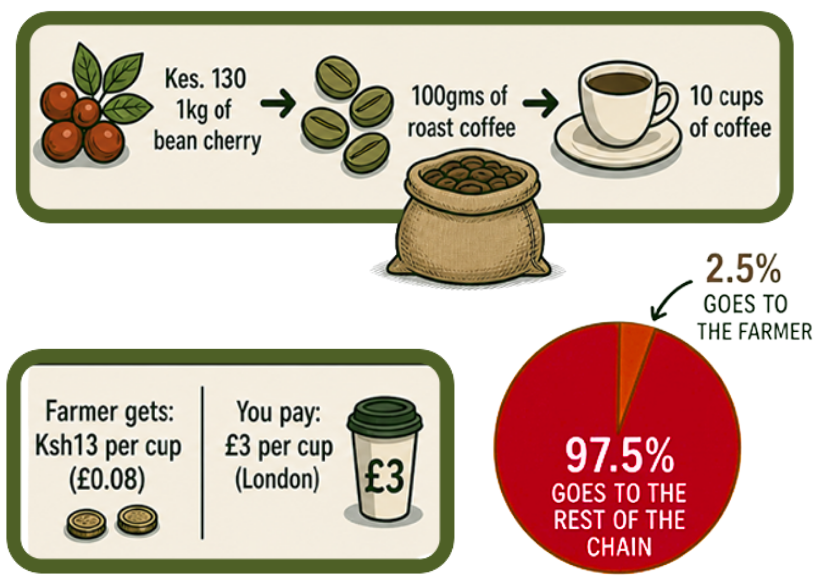
In the pre-colonial system of land tenure and food production in Embu there was no individual ownership of property and land tenure was organised to maximise food production for the community. Women’s knowledge and skill in plant and land management was highly value and revered in safeguarding food security for the community.
Colonialism upended this however by imposing a patriarchal and individualised system of land ownership, imposing hierarchies of power, voice and right to resources. The colonisers decreed that in each homestead the one who would have a voice and make decisions for the land and the family was the Mũthuri–the one who chooses (the man) and he would speak for the mũtumia–the one who remains silent (the woman). The mũthuri would be liable for paying the tax on the household and tax was levied on every hut in the home. The result of this was not only the breakup of collective households and land stewardship, but the subjugation of women. Women were pushed to have more children, producing more labour to work the coffee farms, to pay the king’s tax.
This colonial hierarchy on who determined the flow of resources, most disenfranchised women, denying their voices, knowledge and access to previously held communal land and resources and the means to provide for themselves and their families. Even though women performed most of the labour on the land and in the household, they were denied rights to owning land, the means of production and the determination of what happened with the economic value of their labour.Colonial patriarchal agricultural practices pushed for the domination of coffee as a mono-crop. Not only did it result in the destruction of the indigenous life that was already in the land, it required the suppression of all other life from returning because coffee is a very nutrient hungry crop and they wanted no competition to it.
Ĩrĩma would be called to manage the weeds. However as individual ownership and communal fragmentation took hold, the use of synthetic pesticides and herbicides was encouraged to replace the communal labour. The effect has been devastating. The land has grown bare and the cases of cancer and organ failure among our people have soared. Women who account for the majority of labour in our farming communities are the most exposed to these toxic chemicals.
Cũcũ has grown coffee on this land for over nearly 60 years. The same crop, a hungry crop, year after year, after year. This is not how our indigenous people related to the land, this is a colonial relationship to the land.By calling on ancestral memory and experience we can track the beginnings of our crises to when The man took on individual ownership and stewardship of the land, severing the relationship between it and its ancestral stewards. The effects of decentring Black matriarchal knowledge in land stewardship and centring white patriarchal capitalist land use are evident today in the depletion of the land, impoverishing of our people and the perennial trope of the starving African child in need of aid.
We know now that it is not that coffee isn’t profitable, it is that the men ate the money. We know that it is not that the land is unproductive but that we have ruptured its relationship with those who stewarded it.
When we speak to how the coffee business is now and the crises we are in, we say:
mĩgũnda nĩ mĩgĩnju – the land has grown thin. The lands have grown thin of life - ecocide, thin of people - displacement & migration, thin of water - drought, thin of nutrients – soil depletion, thin of money - poverty, thin of love - individualism. A taxonomy of thinning.
mbia nĩciarĩrwe nĩ athuri – the men ate the money, those who decide ate the money. Who is in a position of power and decision making and how have they been consuming the resources and conditions necessary for life to bloom?
These serve as a diagnostic framework through which we can map the crises by naming the relational rupture that has occurred, the undesired outcome that has resulted, and help us assess our strategies of repair. We’re experiencing the effects of the thinning of the relationships necessary to sustain life. Our primary work is therefore to identify which relationships have ruptured and we can tell by the undesired effects. What relationship has grown thin, a taxonomy of thinning, and where do we need to pour more love in.
Ĩrĩma – Pulling together
Which relationships are we pouring our love into?The land has grown thin of nutrients and now coffee needs fertilizer to grow. However the more synthetic fertilizer we use, the less the plants absorb. With lower harvests there is less money to buy the fertilizer inputs with, our farmers are trapped in an impoverishing cycle. In response to this, many of my parents’ generation have been clearing the coffee from the land they inherited, saying it no longer makes money, opting to grow food or other cash crops like hass avocadoes, miraa–khat and macadamia.
As land-based communities and farmers our lives have grown deeply enmeshed in and dependent on the global racialised capitalist system. As we respond to our economic crises and chart our futures, many possible paths lay ahead. How will we choose which direction we pull in and which future relationships to nurture? The perils of this are most visible in our community with our turn to macadamia. Macadamia are a tree nut indigenous to so called Australia. They were an important source of food for the first nations peoples in that land. In Embu macadamia were introduced as a substitute for the declining earnings from coffee and are intergrown among the coffee. Macadamia are the most expensive nuts in the world.
I asked cũcũ to tell us about macadamia and this is what she had to say:
K: Nĩ wa wona N: Ĩĩ nĩ na wona K: nĩwavũra mbica? N: Ĩĩ nĩ na vũra K: Rĩu twathiĩ tũkone mũthithia rĩu varia urĩ. Mikandamia wĩ mũvũru rĩu N: Ĩĩĩ wana mikandamie nĩĩĩcĩkene K: Wana kwenyu ĩĩkuo mĩngĩ mũno ĩno N: Nwa mũkethaga. K: Ĩĩnii N: Mũkendia kũ K: Aĩĩ, ino itiĩna mũvango rĩũ kwĩ na andu maraũkire makũgũra ngandamia, na mathondekete thoko rũnyenje, riũ itiĩ mivango, tondũ wa kũu ũkagũrĩrwa ciaku, wenda kũvira, nĩkuũ ũkuvira, itĩna pamanenti. Nĩwicĩ thoko ĩĩ vandu, na nagũo andũ marerwa kavinda gaka. Andũ nĩ mendie indũ ii vamwe cionthe. Na mwendia ii vamwe cionthe, nĩ mũkũgĩa mbia. Tundũ thogora ũrĩa umire, wathiĩ kĩrĩmarĩ, wathiĩ kũ, nĩguo tũkendagia naguo. Rĩu nwaa ino cietũ, broker agĩũka, nĩ ũkũmenderia ngandamia? Ndũrete mbia tũndũ tĩmvota gũtinda ngĩtwara kĩrĩmarĩ kũthiĩ kwendia kuo. Ũkinendia kuũ N: Ũkinendia mbia nini K: Ĩĩni, agĩkuva nake akĩthiĩ Njerũ ana gũtiĩ ũndũ mwega rĩu. Twĩ thina mwĩngĩ tue N: Ũrĩmi ũtiĩ mbĩa, wana mwera ũgakorwa na mbia mbia itĩronekana ũkĩrĩma vanini vanini K: Rĩu nĩtũgũrĩrwa ngandamia na kilo ĩgana. Rĩu cia kũra, ĩgana rĩrĩa twerĩrwe gũtire, nĩ ũgũrĩrwa mĩrongo ĩtandatũ, mĩrongo mũgwanja, mĩrongo ĩnana. Icio nĩ cio cia mũthia, ũrĩa ũkũgũrĩrá wega agĩkũgũrĩra mĩrongo kenda, akĩna thiĩra Rĩu njerũ wana tũkĩaragia ĩĩĩ, njerũ nĩũndethia atĩa, nĩĩ ũndethia atĩa N: Ũrenda ngotethia atĩa Nĩrenda ũnjarĩrie ngiri mĩrongo mũgwanja, ũnengere. Ngeke atĩrĩ, ngarĩmithie mboco ciakwa ciĩ naava, wananĩguo ngũkwĩraga tũthiĩ kapuru ngwonie ũrĩa ivana. Nĩrerwa riĩ iĩnacio nĩ nene. Natũmanire ngiri ithatha, na itingĩ kava wanaĩ kacunjĩ. Mboco igwatanĩte ta icio wona vau ĩĩ iĩĩ thĩna mũno kũrĩmĩra. Nĩ kũrĩma vandũ vanini, vau vengĩ vanini ikĩrĩcagwa ta kĩthere kĩ thapuria. Tũthie tũkone mũthithia varĩa ũrĩ. | K: Have you seen it N: Yes I have seen it K: Have you taken the pictures? N: yes, I have K: Now we are going to see where the mũthithia is. These macadamia have you taken pictures of them? N: Yes, people know of macadamia K: Even in your home you have many N: Do you still harvest them? K: Yes N: Where do you sell them? K: Aiii, these don’t have a plan. Now there are people who have come to buy macadamia, and they’ve made a market in Runyenje. Now there’s no plan, because where you decided to sell, is where you’ll sell it, there’s nowhere permanent (to sell). Do you know when a market is somewhere, and this is what people are being told now, People should sell their things collectively. When you sell them collectively, they will get more money for it. Because the best price that you got, if you go to town or elsewhere, that’s what we’ll sell it at. But these of ours, the broker comes and says “will you sell me your macadamia?” “Bring your money because I won’t be able to take it up the hill to sell” Then you sell N: Then you sell it at a low price? K: Yes, he gives you and then he leaves Njerũ there’s no good thing now. We have many problems. N: Farming doesn’t have money even if you’re promised? K: Now they’ll say they’ll buy macadamia a kilo for 100 shillings. But when you harvest, they will buy it for 60, 70, 80. That’s the best price, and the one that will buy it for you the best, 90, and then they go. Now Njerũ as we are speaking, how will you help me, how will you help me? N: How do you want me to help you? K: I want you to search for 7 thousand shillings for me, and give to me. So that I can have my beans tilled and weeded, that’s why I was telling you we go to Kapuru I show you how they are. I am told the overgrowth they have is so much. I sent 6 thousand and it wasn’t enough to finish a section. When the beans are so overgrown like that you can’t look after them. You work on a little and put it in your pot to eat. Let us go and see the mũthithia where it is. |
Kenya is the third largest global exporter of macadamia, after South Africa and Australia, though few people in Kenya eat macadamia or can afford them in the shop. In Jan 2026 macadamia buyers offered farmers in Embu as low as Kshs 40 per kg of shelled macadamia nut, while in London macadamia retail for an up to £30 per kilogram of unshelled nut or Kshs2500 per kilogram. This works out to macadamia farmers only getting 2.3% of the macadamia retail price. The man is eating 98% of the money and the only added value he does is cracking the nut and packaging it.The reasons for our people’s move to growing macadamia is evident, a high market price, but we did not arrive at that better economic future we had hoped for or had been promised. Economic pivots that are led by foreign knowledge systems and serve foreign markets, coupled with the fragmentation of our communities, relationships and ways of knowing, lead to the exploitation of our communities. This is the trap that our farmers, majority women, are caught in.
Kenya’s coffee boom peaked in the 1980s. This was at the height of the coffee farmers’ cooperative movement. When coffee bonuses, surpluses from market sale prices, would be paid back to farmers. Financial irregularities, misaligned governance incentives, delays in payments coupled with market volatility, and land fragmentation and depletion have led to the collapse of the coffee farmers’ cooperative movement. Kenya’s coffee production has declined by over 70%, from 129,000 metric tonnes in 1990 to 40,000 metric tonnes in 2020.The cooperatives offered training and education, inputs, financing and a unified voice for farmers.
In their absence, farmers like cũcũ are left disconnected from the realities of the economic system they are part of, and negotiating individually with middlemen. Cũcũ speaks to the vulnerable and exploitable position farmers are left in. Cũcũ asks me to find her money to hire people to work on the land, speaking to the resulting need for financing. The men have eaten the coffee money, and the eating doesn’t end there as the farmers then become targets for predatory loans and financing. In the absence of community and cooperative pooling of finances, many Kenyan farmers now turn to corporate lenders.
M-Kopa is a “UK-headquartered emerging market fintech” and in 2024 the company was “recognised by the Financial Times as one of Africa’s Fastest Growing Companies for the past 3 years” and finances loans to ‘Everyday Earners’ across Kenya, Uganda, Nigeria, Ghana and South Africa. Kenyans are reporting paying up to 3x the value of the assets financed e.g. phones. Capital that is accumulated from the extraction of the Global Majority, is then used to finance predatory loans back to us. When cũcũ talks about the men that ate the money, she is referring to the men that made decisions for the home and the leadership of the cooperative movements that led to their collapse.
The money is also eaten by the brokers and buyers that sit in the middle, and the corporations that profit from coffee and macadamia sales in local and global markets, and those that come to lend us back our money. These are the hazards that we will face as farmers if we pivot to growing any cash crop, and while we operate within the colonial capitalist system without a unified informed front.Cũcũ urges us to restore our relationships with each other so that we can organise and coordinate our movements. She speaks from a place of lived experience, informed by how our farmers successfully organised in the 1980s. She urges us to learn from their lessons.I urge us to critically understand, make visible and transparent the full economic picture we are a part of, and develop local exchanges of this knowledge.
I urge us to consider the risks of building the foundations of our liberated future on trade with markets far away, the capital may be accumulated there, but there are many middlemen that eat the money along the way. In our movements we must be conscious of the pull of the market.
Kũgũrũka – taking off
What drove the little birds away?
To have to leave is hard, but it is harder for the ones that are left behind. When I talk to cũcũ about it, I feel her sorrow, frustration and pain. Along one walk through the farm she shares about those that are leaving.
N: Tondũ wanao maravanga makathiĩ? K: Ĩĩĩni rĩu ndorona nĩgũtigwa gwĩkariĩ ũguo N: Wĩguaga atĩa na ũrĩa gwecũrĩte mũciĩ K: Matigwe maĩ onga. Ũcio muciĩ wecorĩte kibi. Rĩu tũconi nĩtwagũrũkire tũkĩnathiĩ. Njerũ N: Oooiii K: Mmm, ũtigwe ũcaragie mũndũ wa kwandĩka N: Ĩĩĩ, tũconi twathiĩre K: Ĩĩĩ atĩ tuconi nĩ twagũrũkire, mmmh | N: Even them they are planning to leave? K: Now don’t you see it’ll be left like that N: How do you feel given how the home was full K: They’ll be left alone. That home was full to the brim. Now the little birds flew away. Njerũ N: oooiii K: Mmm, then you’re left searching for someone to employ N: Yes, the birds having left K: Yes, the little birds flew away |
The marimũ are devouring life across the land and our mothers and elders are left alone holding the loss and trying to sustain the family while the hands to support them grow fewer. It is hard to leave, and it is sorrow to be the one left behind. I bear witness to cũcũ’s sorrow, tũconi nĩ twa gũrũkire – the little birds flew away. She is watching her family get captured once again.
For a long time, coffee was Kenya’s leading earner of foreign exchange. Foreign exchange is used to stabilise the currency and pay off foreign debts. With a decline in coffee yields, there has been a decline in what the government collects.
Recently the government has been making calls for Kenyans to move to affordable housing in the city. It says that the land has grown unproductive and that people should leave the land of their ancestors and let the government and corporations take over management of the land so that we can feed the nation. But there are no jobs in the city, and so the government says it is creating opportunities for jobs majuu – up there, encouraging Kenyans to seek low-paying service and care jobs or to fight in foreign wars. The marimũ that depleted the land, now eye the people, seeing us, our bodies, and our labour as assets to be used to generate more money for them to eat.
This call from the government is not for the benefit of Kenyans. It is about raising foreign exchange in order to pay interest on the debts that the men are eating. The Central Bank of Kenya (CBK) reported a record US$5.037 billion in remittances from Kenyans working abroad for the year 2025, the leading earner of foreign exchange. The Kenyan government continues to borrow money from the IMF and World bank. With these loans Kenya commits to cut funding to education, health, water and other public necessities making it impossible for us to sustain ourselves, while pushing the privatisation and sale of public institutions and lands. This borrowed money does not reach the people, it is eaten by the men. The IMF and World Bank know this and yet continue to issue these loans. This a global network of marimũ, consuming the land, consuming the people.
The same billionaires that own the coffee companies that profit off our backs and deplete the land are the same billionaires that own the banks that loan us money to go further into debt. If the government was really working to feed our people, we should first start by asking, who is the land in Kenya feeding and benefiting today? Marimũ value capital more than they value our lives. You don’t sell off that which you are in relationship with.
What happened to our people in Embu continues to happen today through gazettement notices that declare state ownership of indigenous lands and claims of addressing insecurity and indigenous land mismanagement. We have received calls from the far side of Mt. Kĩrĩnyaga from the Yakuu people, indigenous stewards of Mukogodo forest and far west from the Ogiek of Mt. Elgon. Some of these communities are then pushed to settle outside their ancestral forests where they sustained themselves and start to cultivate coffee using the same harmful agrochemicals that are killing our people in Embu.
The Kenyan government’s actions are part of a global colonial capitalist architecture whose manoeuvres include: a claim of dominion over indigenous lands, the manufacture of debt, the seizure of land and displacement of indigenous land stewards, the relegation of indigenous and matriarchal land stewardship in favour of white patriarchal land practices and capitalist extraction. These ultimately leads to the degradation of the conditions for life and a thinning of the land and its capture for further exploitation.
We must be aware that the same hand that pushed us down from the table, now moves above us offering aid. The hand demands recognition for the effort and calls it generosity. It says it must fill itself with strength from eating from the table and promises to pull us up onto the table. But first it insists it must relieve us of the things we hold, which it takes off of us and adds to its own, it must sever us from one another so that it can raise us up, one by one. Capitalism, patriarchy, racism are the acts of wounding our relationship with each other, and to maitũ – our truth, our mother, Pachamama.
Salvation from afar will not save us and it cannot be relied upon. Cũcũ calls us into the acts of nurturing our relationships with each other and the land. To remember our divine purpose and the power we have in our oneness to nurture all life. To remember andũ nĩguo ũtonga – the people are our wealth.
Cũcũ Studios – Granny Studios
Over the last ten years cũcũ has been calling me home. It has been a lot to bear witness to. I didn’t know what to do or where to begin. But I think cũcũ knew what to do. A few years ago she said, mũramindĩra ciana na itice kwaria kiembu – you are bringing me children and they don’t know how to speak kiembu. In this I heard her say you do value the gifts of language I have given you, you are not practicing them and sharing.
I heard her say that the little birds that flew away bring me children that cannot hear my songs, with whom I cannot share my wisdom, that we cannot call for help to our ĩrima. I took that message home and cũcũ studios has been a dedication to the call to practice and share one the most precious gifts and strengths I received from my cũcũ. Our language Kiembu, the language of the relationship of the people and the land we call Embu. An ancestral blueprint and technology that speaks to what the heart feels, helps the mind understand and moves the body in oneness with the community. Cũcũ studios is an intergenerational remembering practice led by cũcũ Kaĩru.
Ancestral wisdom is transmitted through the practice of everyday life. We remember through the body, through feeling, touching, hearing, seeing, saying, smelling and tasting. Younger ones learn to carry the knowledge through experience. We remind the body what it knows. We're in the work of the restoration of ancestral transmission lines through which our cũcũs our grand-mothers pass on the knowledge of how to steward the land that will be needed for us to gũcokanĩrĩria mũciĩ.
We learn the words and incantations that call the body to feel and remember. This requires that we develop a relationship with the ancestral language in which it lives. We’re coming back to our language Kiembu and to the land as places of our meeting, learning and practicing. By pulling our voices together, we practice in kũhũmbũra – the act of revealing. Most of all we’re remembering how to pull together across generations.
Children suffer the devastation of colonialism the most and with cũcũ we are remembering how our people held the youngest amongst us through times such as these. Cũcũ shares that as children during the fight against the British colonizer, they lived under constant threat of colonial violence, their elders at risk of capture. Their father would take them at night to take the secret oaths of the Mau Mau to defend the land. There were stories, songs, dance and ritual shared with the younger generations that held them through what was happening. They were part of the movement; they were held in their community and through it
Guided by cũcũ we make space for the grief, rage and fear we’re all holding. Stories and songs help us to share the things that were difficult to say. Here cũcũ shares the story of what happened to the chicken.
N: Ngũkũ atĩ ciekagwa atĩa? K: Wĩ na mbembe ĩĩĩ ũgĩũka ũgĩtwikia wa varĩaTĩcio ĩcio ciaũka, ũgicoka ugikia rĩngĩ wa avaa Ũgĩcokia rĩngĩ ũgikia ava Waikia ava ĩĩĩ, mbuga nĩũmĩgwatĩra ava N: Ũkĩamatwa K: Yakinya vakũvĩ nawe N: Ũguo nĩguo twamatirwe nĩ athũngũ ee K: Ĩĩĩ nĩguo twamatirwe ta ngũkũ N: Ta ngũkũ, wueeh.. | N: What was done to the chicken? K: When you have maizeyou throw them over there you see they have come, then you throw here Then you throw right here when you throw here you’ll just grab it N: then you are captured K: when they move close to you N: that’s how we were captured by the whites K: That’s how we were captured, like chicken N: Like chicken, wueeeh.. |
Our people were captured like the chicken, by the hand that we thought was helping us. But we have the gifts to bring life back to the land.
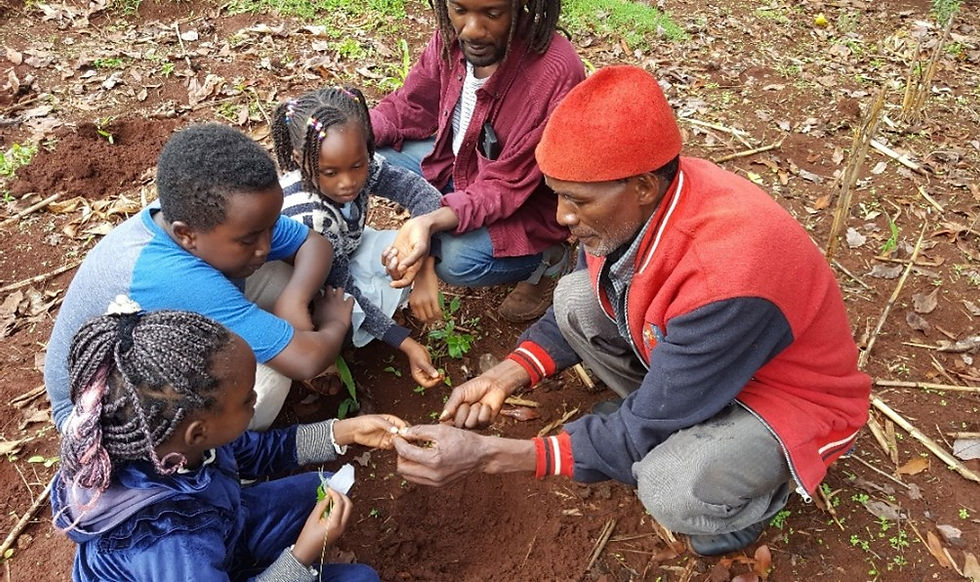
On this land where my uncle once raised me up to reach and pick the high coffee cherries, we now reach down to the soil with the next generation, sowing seeds to feed us. Together we affirm a mutually nurturing relationship with the land.
I share with them the joys of being with the land, the power of having ancestral land knowledge. They are growing up experiencing how the land feeds us, and nurtures us, and learning how we feed and nurture it. The healthier the land is, the more generous it is with its gifts. By sowing the seeds and nurturing the land, we can feed our family. This is the greatest power we hold, and most our dearest relationship.
Our ability to face and overcome what lies ahead of us is dependent on the strength of our relationships, our knowledge of each other and especially our shared experience in practicing together. Our relationships are a strength that we build up through shared deliberate practice. The land was the first and most accessible partner for us to practice with, and hunger our most unifying and constant need. Even before we built collective governance and political structures, we fed each other and stewarded the land together. We are developing our own relationship with macadamia inspired its first nations ancestral roots. It is a gift of nature, highly nutritious and can and should feed us who grow it first. We are incorporating it into our own diets and selling it more locally.

We’re calling on our families to be our own first customers, especially calling younger generations to spend their money at home, buying the macadamia we grow and helping us to create a revolving fund that will cushion our cũcũs and aunties. By placing our own communities at the centre of the market, we can earn more and make our own determination of what market really is. Macadamia are highly sought after all and our people are willing to pay a lot more than Kshs40/kg and to crack the nuts themselves. When we grow for ourselves, we treat the land better and put love into our own communities.
Ũtonga wetũ – Our wealth
Andũ nĩguo ũtonga wetũ – Our people are our wealth.
Cũcũ studios is also a space of meeting and practicing with others stewards of the land from the Global Majority. In the journey of calling on other ancestral wisdoms of the land we have been blessed to meet new siblings and atungati a tĩri –stewards of the land, who have answered the call to our ĩrĩma. They are family, comrades, movements of change. They are our wealth
Rustic Garden
The Rustic Garden located in Embu Kenya is an indigenous inter-generational land stewards collaboration and home to farmer Nyaga.
Nyaga’s mother was one of the first coffee extension officers in Embu. It would have been her job to teach and train the earliest coffee farmers, including cũcũ Kairũ, how to grow coffee and the dominant agricultural practices of the time. Embu is home to the Kenyan Agricultural Research Institute, the foremost agricultural research institute in Kenya with a colonial legacy. She would therefore have been teaching what we now recognise as the most harmful farming practices, intensive mono-cropping, pesticide and herbicide use.
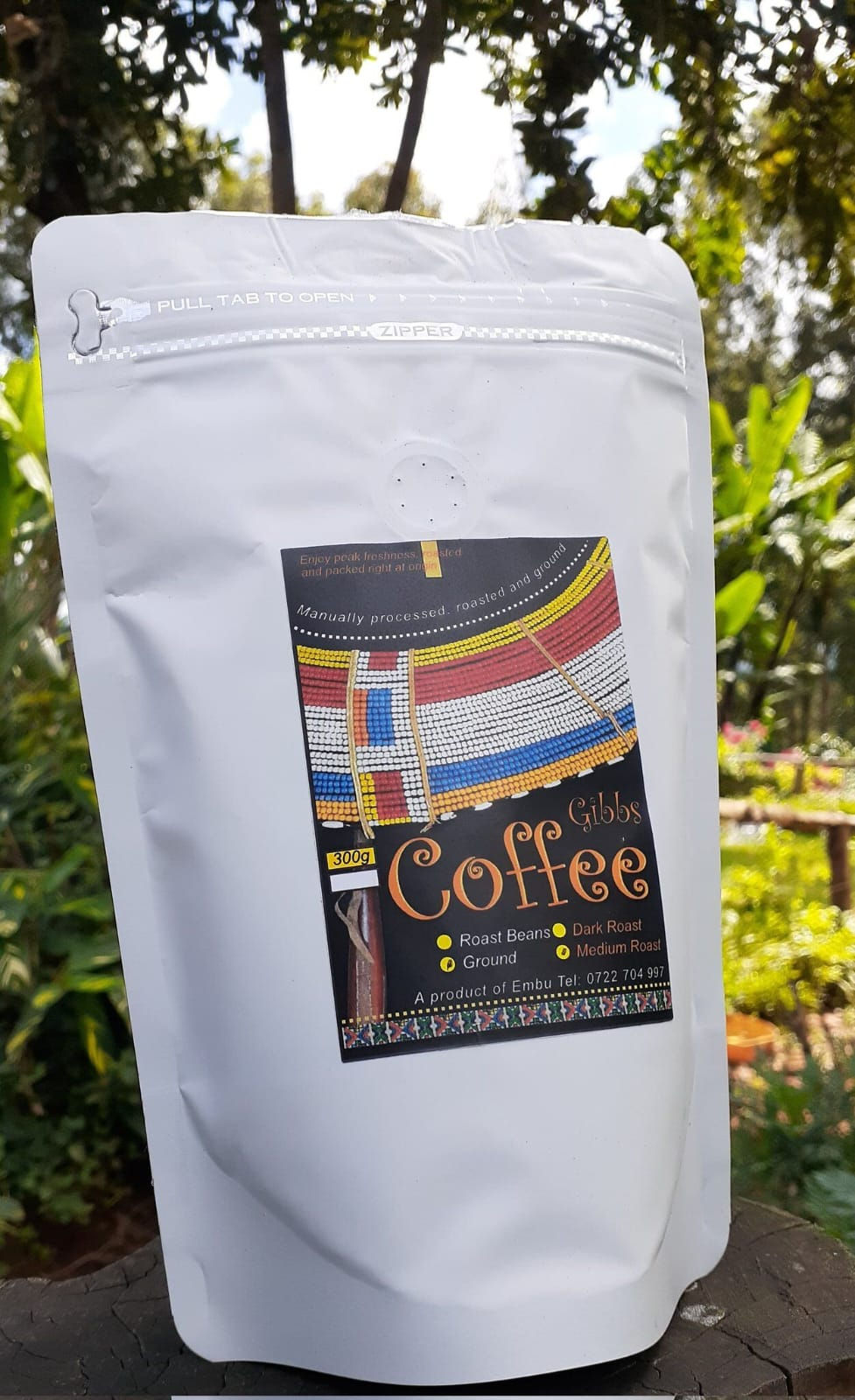
Decades later, Nyaga would inherit the land that is now The Rustic Garden. On it grew coffee and tea, and like many of his generation, my parents’ generation, he decided to uproot the tea.He was about to uproot the coffee as well but, as he drinks coffee he decided to see if he could roast and drink his own, influenced by his time in Ethiopia where coffee is ancestrally from, and where peoples have millennia-old relationship with it. Because he was going to be drinking the coffee he grows, he learnt to grow it organically. Nyaga honours the ancestral Ethiopian coffee culture by manually milling in a mortar and pestle, and pan roasting the beans, producing Gibbs Coffee. Together we are working within our community to make the most of the coffee that already grows on the land while reducing the harm that its growing causes.
Nyaga and I met as I was looking for farmers who were growing coffee without pesticides, herbicides or fertilizer for our family to learn from. He was looking for help in developing Gibbs coffee and bringing it to the world, and developing the Rustic Garden as a place for learning how to return to indigenous land care and home tending.
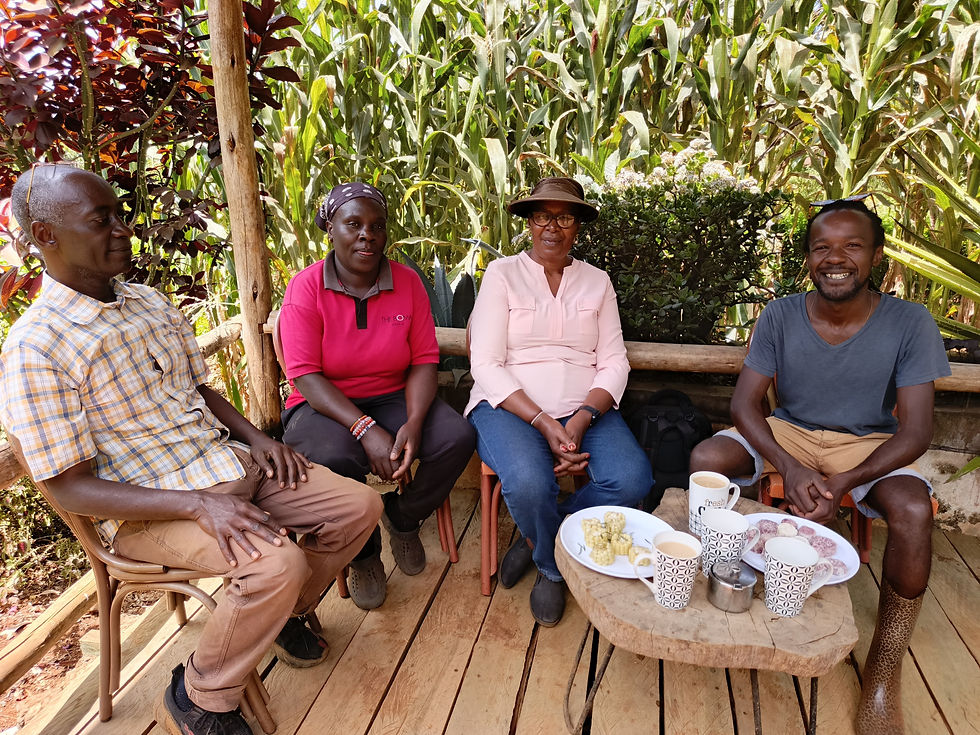

Now freshly roasted Embu coffee sits alongside a traditional Embu breakfast of ndũma na mbembe. Maize grows tall at the height of drought, carefully tended on land where once grew tea. Everywhere in the Rustic garden the land is open to the sky, it breathes and blooms.
Our ĩrĩma is to heal and restore the land from intensive extractive cash cropping, securing food sovereignty and economic justice for our farming communities beyond colonially set pre-destinations. We’re working towards a future where every coffee farmer is able to feed themselves and their family from the land, understands the business of coffee in its entirety, is able to drink their own coffee and decide if coffee growing is what they choose for their future.
Caisa Maloka
The story of colonialism and coffee doesn’t start in Kenya. Our siblings in Colombia suffered the imposition of coffee on their lands over 200 hundred years ago. They have a longer experience of grappling with agricultural practices introduced for the benefit of the colonial economy. In their decolonial movement they have developed their own relationship with the plant and established their own taste and production of coffee.
On my most recent visit home I have brought cũcũ visitors, new comrades I have met on my call for our ĩrĩma. One of these is Javier (Javi), who brings greetings from the Maloka Agroecological Social Research Action Center (CAISA Maloka), situated in the village of Los Alpes, municipality of Dagua in Columbia. CAISA Maloka “has been a place of experimentation and union, where the community has seen ways to make participatory decisions to manage rural development from the peasantry for the peasantry”.

Javi shares that the indigenous peoples of Columbia have a practice of collaborative effort where they come together to assist each other in working on the land and in community called minga that is similar to ĩrĩma. At this cũcũ looks at Javi then looks at me and smiles as she says ũyũ nĩ mũndũ mwiro, ũyũ nĩ mũndũ wetũ – this is a Black person, this is one of us. Javi shares photos of CAISA Maloka and of the land. It looks like Embu, and Javi says Embu feels like it. He shows us their organic farm and how the cows walk free on the land.
He also shares one of their most important practices and technologies: Biofactoria to produce liquid bio fertiliser and practices for nurturing and multiplying microbial life that restores the connective mycorrhizal network of the land. With this they grow coffee organically in a farm that is bigger than ours. He says we can do it too so that cũcũ we never needs to buy fertilizer again. Javi offers their knowledge and support to develop a Biofactoria, enough to supply the whole family and teach others in our community to so too.
It is 2026 and the price of fertilizer is sharply on the rise following the closure of the Straight of Hormuz by Iran in response to the unprovoked attacks by Israel and USA. We’re accelerating our development of a Biofactoria at Mbiria Farms so that we can produce enough bio-fertilizer to supply the whole family, and support others in our community to do so too. With cũcũ we have agreed to dedicate a part of the land as a healing forest where microbial life and other stewards of the land will be invited back and where we will get the living seed soil for the Biofactoria.
From our siblings at CAISA Maloka I carry with me their beautiful belief that when making the bio fertilizer “It is not mixed only with hands and arms, but with thought and intention”. We’re inviting life to bloom, calling our microbe siblings to break down ancestral gifts, rocks and minerals to feed the coffee, to feed our people and all life on the land. In a time of war stewarding the land is the work of hope, love and collaboration.
Our family is growing. In our decolonial movement we’re learning from and calling on our siblings from the Global Majority to share with us how they are navigating their journey through the colonial legacy of coffee and returning to stewarding the land.
Black Rootz
Black Rootz (BRZ) is a Black-led multi-generational food growing community and enterprise in Tottenham UK, working to achieve food sovereignty and justice for all global majority people in the UK. The Black Rootz community is based out of Wolves Lane centre – a site that was formerly a flower nursery. It was founded by sister Paulette Henry who along with a group of Black women at the height of the covid pandemic, recognised that the lack of culturally relevant foods and food knowledge amongst Black people was contributing to high illness and mortality rates, and they decided to act. As a majority migrant area, they recognised how gentrification in Tottenham was pushing Black communities out and leaving them without spaces for cultural land practices. They led the charge in reclaiming neglected land to create a local growing space for their community.
Black Rootz speaks to the link between health, shared community practices and eating ancestral culturally relevant foods. It advocates for land and food growing as a cultural heritage and right for Global Majority people in the UK. Black Rootz is navigating this within the core of the colonial capitalist empire.
I discovered Black Rootz in 2023 when I was very overcome with what I had been learning from conversations with cũcũ Kairũ and looking for comrades in the UK to help me bring her message to the Britain. What I found was a community of Black elders who were holding space for many other little birds like me to come back to the land, to be held by it and by community. An intergenerational, intercultural Black community, navigating how to create a home that nurtures many, build common ground, and pull together by restoring ancestral connection to the land. It has been a place of healing my relationship to the land.

Every week we have an intergenerational community growing day where we gather to tend the land together – an ĩrĩma. Our elders and cũcũs bring and share their wisdoms, their seeds and their old forgotten names that tell us what gifts the different seeds hold for us. Together we sow seeds, tend to plants and share in the land knowledge we carry from our ancestral lands. We grow food and medicines for each other. We share in ancestral practices and wisdoms. We’re blessed to count among our elders Mama Selma, now in her 90s, who is revered for her relationship with the land in Tottenham of over 50 years. Her knowledge of land stewardship for pumpkin growing is unmatched, and her seeds have reached around the world.
Over the last 3 years I have been blessed to help host and support the weekly ĩrĩmas. Helping in growing, knowledge sharing, cooking, brewing plant medicine and readying the home to receive the community. I bring my news and gifts from home. My family has grown, and I have been blessed with many more cũcũs.
Singing and dancing are ancestral rituals we share at Black Rootz. Here I am remembering the ancestral technology and power of the Black drum that colonialism and christianity silenced in Embu before I was born. Elders share the drum’s power to rally community, to unite us and help us to hold and process grief together and move us into action. With others from Global Majority lands, it has been a place to witness and hold the grief of what is happening to our ancestral lands and people, to compare our notes and move through that grief with action.
In the turn towards rewilding the UK, Black Rootz is challenging land being seen as other, something separate from us that is to be managed. It is our ancestor and we need to remember our relationship to it. Black Rootz calls for the centring of Black indigenous and ancestral wisdom in the work of restoring life to the land and resourcing and funding Black movements in this work.
With sister Paulette we visit cũcũ Kairũ. We sit together and talk about collective land stewardship as a practice that must return to the UK as much, if not more than anywhere else. If global majority lands are to be free from dependence, extraction and desecration by the global minority, then the global minority must also return to a relationship of stewarding the land and growing their own food. In the core of empire, the most radical political act is to love the land, and nurture it to feed ourselves and our communities. A love for the land stands in opposition to bombing it, polluting its rivers or digging out its mountains.
Twendane – Let us have love for one another
To build our brighter futures we must remember the gift that we have we have been given by the land and by our elders. That no gift is too small to share, to make an impact. That instead of waiting on a hand from above, we must instead reach across to our siblings.
Twendane- Let us have love for one another.
K: Karĩa nĩnako kanini, kaandute kavirĩrwe mũndũ ũrĩa. Nĩgetha wanake atethe..atetheke. Warega kũrũta atĩ tũndũ wĩ na kanini ndũkwona njerũ wanawe wĩ na mevya kwa ngaĩ tũndũ ngaĩ nĩũkũvete na ndwatethia ũrĩa ũtaĩ na gĩakũrĩa. Nĩwagĩrĩre kũmũtethia, mmmh, wanake atetheke, watee ũrĩa watethekire. Wee wanawe ũgĩtetheka ĩĩĩ, tĩkowathiĩre kwa ngai kũmũvaka, nĩko ũnire atĩ nĩagirĩre gũkũva nĩguo wanawe ũtethagie ũrĩa wĩngĩ wanawe, ũkariganĩrwa vau. Ũvetwe indo wanawe ũtethagie ũrĩa ũtarĩ, na nĩguo kwagĩrĩre. Kwĩ ĩndũ maragia vau teeveerĩĩ ngona nĩ mararia ũma | K:The small thing that I have, let me give for that person. So that they too can be relieved If you refuse because what you have is small, don’t you see njerũ even you have a mistake in the eyes of god because god has given you and you have not aided the one that doesn’t have something to eat. You are supposed to help them, mmmh, so that they can be relieved too, just as you were relieved. Even you when you were given, you didn't go to bribe the creator, it’s that god saw fit to give you so that you can be relieving the other as well, and you forgot that. When you have been given things, aid the one that does not have, that is how it should be. There are things they speak there on TV and I see they are speaking the truth |
Tũcokanĩrĩre – let us come back to one another. Let us listen to one another. Let us observe, listen for, and seek out the voices that have been ignored, overlooked and silenced. Let us listen to their ĩrĩma.
N: Tũcũkororo tũgakwonaga K: Tũkamonaga twĩ vau, ũrĩa mvana N: ũrenda kũmera atĩa K: nĩramera ngaĩ amarathime, naameke wega, na matũre ũtũro mwega N: Na wĩngĩ atĩa K: Na nauga atĩrĩrĩ, tũcoko tũtũ, vau tũrĩ, tutikae na kumenana, wanakoro nĩ mbia icio ĩratũma mamenana. Mũndũ nĩacarie kanyamo gake, ĩkumbatĩrie, arĩcage, akirumagie mũrũ wa ng’ina N: akirũmagia mũrũ wa ng’ina, nĩguo K: ĩni K: na mami waku, na vava waku N: ĩĩĩ K: ĩĩni N: twendane ũgũo K: twendane N: ũrĩa andũ mekarage tene K: reka twendane nao maragie N: ĩĩĩ, nyiĩmbo ta icio nĩwice ndiana ciĩgua taminera ĩĩngĩ K: Makainaga atĩrĩrĩ, reka twenda mwendwa reka twendane, reka twendane mwendwa reka twendane, reka twendane nao maaragie. Mmmhm njerũ Nĩtwaria, tarĩu mukiendana na mũrũ wa nyũkwe, na nĩ mwatigĩrĩrwe atĩrĩrĩ, andũ aya, matiendaga kwonana. rĩu rĩrĩa mũgacokanĩrĩra, andũ maragie, ĩĩĩya, nacio ciana cia mũriũki nĩciacokanĩrĩree, angwa nĩwĩrĩga kũmona? Aiii ndimerĩga kũmona. Wuueeh nĩmacokanarĩre. Nĩgũo ũkwĩgua atĩra reka twendane nao matigwa mekage atĩa..? Rĩu maramũria atĩ nĩ mwacokanĩrĩre acio nio marerewa maragie, tũndó nĩguo mamenyerete, ĩĩĩ nĩmaragie N: iiii K: namue wĩra wenyu mwĩavi..nĩmũvingya K: njerũ kĩrĩa kĩ vata ni ũndũ wĩ vata | N: Your great-great-great-grandchildren will be seeing you K: They’ll be seeing me there, as I look? N: What do you want to tell them K: I am telling them may god bless them, and do them well, and they should live good lives N: And what else? K: And I have said, my grandkin, there where you are, do not come to hate each other, even if it is money that is causing you to hate each other. Let everyone work for their portion, to be eating, while giving their sibling a bite to eat N: sharing with their sibling, yes K: yes K: And your mother and your father N: yes K: yes N: let’s us have love for each other that way K: let us have for love each other N: the way people were a long time ago K: let have love for each other, and let them be talking N: songs like that you know I haven’t heard them. Sing me another one K: They sing, let us have love for each other, beloved, let us have love for each other, let us have love for each other beloved let us have love for each other, let us have love for each other and let them be talking ok, like now if you have love for each other with your sibling, and it was said, “these people don’t like to see each other”. Now when you come back to one another, people will be talking, “And Mũriũki’s children have come back to one another, have you seen them recently? No I have not seen them recently. Wuueeeh, they have come back to one another.” That is why you hear, let us have love for one another, and leave them to be doing what..? Now they are asking have you come back to one another, leave them to be talking. For that is what they do, talk. and you, you be fulfilling your work K: njerũ the thing that matters, is a life with matters |
I carry this message from cũcũ Kairũ and from our people to you, your peoples and your lands. She calls us to the work of gũcokanĩrĩra na kwendana and to remember that money is meant to serve life and its stewardship.
Tending to the land is one of oldest most sacred rituals we all share. We call you to the ĩrĩma of restoring our relationship to the land by stewarding it together. We invite you to share with us what ĩrĩmas you hold and call us to them. We invite you to share your gifts wherever you are, in that land. There, we will be connected and find umoja – oneness.
I honour cũcũ Kaĩrũ’s generosity in sharing her wisdom and hold the deepest gratitude for all the love she continues to pour into our family, community and the land. I honour her wendo – her love.
Njerũ kirya kĩ vata ni ũndũ wĩ vata – Njerũ the thing that matters, is a life that matters


Wow, what a beautiful piece! It makes me even more sure that our grandma's wisdoms will guide us forward. The practice of ĩrĩma is really powerful and it is amazing to see how it is present across communities of the world. In Colombia they have the minga and in Brazil we have the motyrõ (mutirão), originating from Indigenous peoples. It also deeply spoke to me what your cũcũ Kaĩrũ said about gifts: "When you have been given things, aid the one that does not have, that is how it should be." It is exactly what my grandma Luzia means when she talks about adding água no feijão (water in the beans). ❤️
It's an amazing thing to remember that we were stronger in the past and we can repeat it.
We have an opportunity to be better and make our communities stronger but together. The little birds need to be shown their way home.
"We must be aware that the same hand that pushed us down from the table, now moves above us offering aid."
A delightful and comprehensive rich story dredging ancient embu wisdom at the foot of Mt Kenya from cucu to Njeru who paints a rich picture of how the colonial government stole the peoples land and created an extractive system that remains in place till today through the global multinationals. Still hope thrives in the transfer of knowledge through the elderly such as cucu and coffee ventures such as Rustic Garden producing coffee and applying indigenous land care. Great to see the international linkages to blacks in the diaspora; Colombian friends in coffee farming and Black Roots.