
Retirement is a Myth
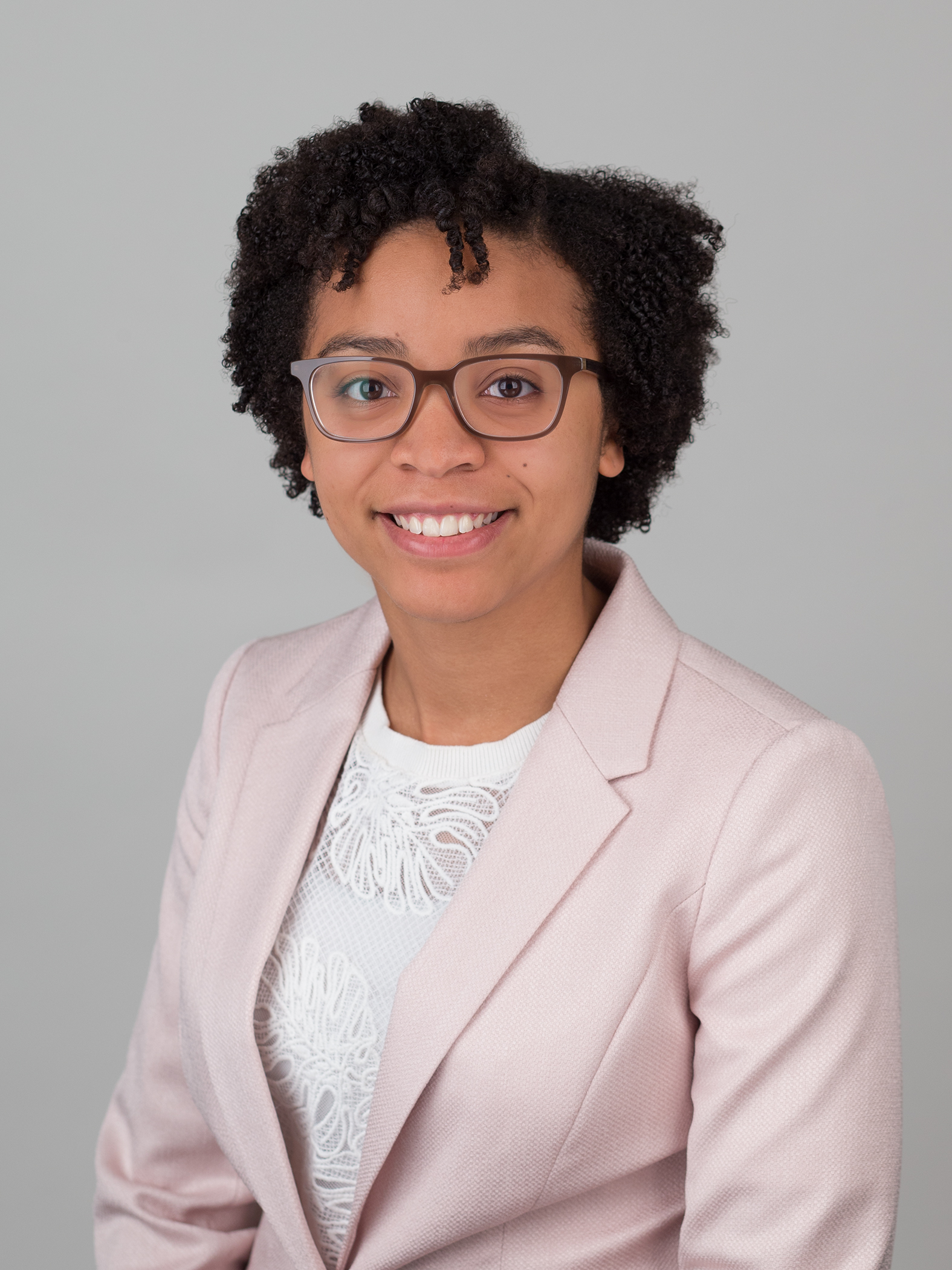
TBP Contributor: Diamond Walton Format: Essay | 12 - minute read

The first time I dissolved my retirement savings account I was 27. I had just quit my job after getting engaged to my fiancé, Nathan, who lived in another state. We were working hard to organize a simple wedding that could fit the budget of a graduate student living on a meager stipend and a newly unemployed public health educator who had very little savings. I knew that most people turned to family for financial support when preparing to get married, but that wasn’t an option for us. Both Nathan and I come from families with limited generational wealth due to centuries of labor exploitation and wealth extraction. Nathan grew up in a small town in southern Virginia where his ancestors worked the land as enslaved laborers, then sharecroppers, and ultimately landowners who could farm for themselves.
At that time the only family history I knew was that both my mother and father’s parents, separately, left the south and moved to California during the Great Migration to escape racial violence and lack of economic opportunities for Black people. That all changed five years ago when my aunt, Anneliese Bruner, shared something with the world that we never talked about as a family.

In 2021, Anneliese republished a book that my great great grandmother, Mary E. Jones Parrish, wrote over a hundred years earlier detailing how she and her daughter narrowly survived the 1921 Tulsa Race Massacre. The book was called “Events of the Tulsa Disaster 1921,” where Mary not only documented her own survival story but those of many others along with a list of property damaged in hopes of recompense. As I pored over Mary’s book I was utterly confused why neither my family nor history books had elevated this event sooner.

It was nauseating to read the first-hand account of Mary fleeing with her seven year old daughter, my great grandmother Florence. I learned about the systematic burning of homes and businesses, including the typing school that Mary owned. I discovered that white Tulsans went from home to home looting Black Tulsans’ property, shooting and killing Black Tulsans in the streets, and literally dropping bombs from planes on the community. The more I read, the more I started to understand how racism doesn’t just incite violence but it leverages the power of the state to avoid responsibility, to destroy and steal wealth from Black communities, and perpetually bring Black people back to square one so that they are financially starting over, generation after generation.

At one point in the wedding planning process, Nathan and I began discussing how we would afford to feed our guests. Finally I said, “Why don’t I just use my retirement savings?” Initially, Nathan was not supportive of the idea but as we continued to run the numbers, even after maxing out all our credit cards, as the kids say, “the math wasn’t mathing." So I opened up my newly created retirement account and saw I had a few thousand dollars inside from the job I just left. I withdrew it all. We had a fantastic wedding, by far, one of the best days of my life. But after the honeymoon, I came back to a new city, a part-time job, and zero dollars in retirement savings.
Retirement
In the United States, the ability to retire is the pinnacle of the American Dream. Those seeking to experience a glimmer of this dream take in constant lectures about saving for old age. Underneath these messages is the assumption that we will each individually save and invest enough money to provide sufficient income for our latter 10 to 20 non-working years of life. On the surface this seems like simple advice which just requires discipline on the part of the future retiree. The reality is that this advice is far from realistic for the majority of Americans, especially Black Americans.
Black households are typically unemployed at a higher rate than their peers. According to the U.S. Department of Labor Statistics, as of March 2026 the Black unemployment rate of 7.1% was nearly double that of white Americans, at 3.6%. Furthermore, Black Americans who are employed have lower wages, and according to the U.S. Census Bureau, in 2024 they had the lowest median income in the U.S. In 2023, the U.S. Government Accountability Office reported that low-income workers were significantly more likely to be employed with organizations that did not offer pensions or retirement accounts.
These employment disparities result in lower payouts from social security and retirement savings accounts when Black workers reach retirement age. Since payouts are low, or nonexistent, Black workers tend to work well past retirement age and many never actually retire. Due to historic and current racial discrimination, Black people also tend to have higher morbidity rates, meaning their retirement savings are eaten up with health care costs. Black people also tend to have shorter lifespans than their white peers, so the amount of time they have to spend down their retirement savings is significantly truncated.
The Myth
I spent many years embarrassed that I emptied my retirement account to fund my wedding. So I made it my mission to secure roles that paid well and offered generous retirement benefits. But my vision of saving enough to retire started to crumble when I scheduled a consultation with a financial advisor. I had just learned about impact investing and wanted to explore what it could look like to invest in ways that could materially improve the lives of Black communities and were environmentally sustainable. When I told the financial advisor how I hoped to invest my retirement savings he gave me a confused look and then advised against putting my savings into something risky. And by “risky” he meant something that would hurt my chances of essentially becoming a millionaire. The reason is that if you enter your income and retirement savings rate into any retirement calculator you’ll see that in America you need to save well over one million dollars to retire.
After I ran the numbers and saw how much I was expected to save, I was shocked. That’s when I had a realization. I was going to financial advisors whose primary goal was to work with wealth holders to grow their wealth. In late stage capitalism, that just means advising clients to accumulate as much money as they can and finding “investments” that yield the highest possible return, regardless of the impact. That was their roadmap for retiring in this country. There was no mention of community, no mention of environmental impacts, and no mention of how much investing mimics the way wealth and labor have been extracted from Black communities for generations because it yielded the “highest rate of return.” Then I thought about my aging relatives and other Black elders in my life. Most had tapped into social security payments or pensions, but very few were just living off of their retirement savings. They definitely had financial challenges but they were still living full lives. Elders who I witnessed living the fullest lives had deep connections to their peers, children, grandchildren, religious communities or their neighbors.
The shame and anxiety about saving enough, securing the right long-term care insurance, and crossing my fingers and hoping that social security is still able to pay out once I turned 67, started to dissipate. My stress grew into rage which transformed into resolve. I was over feeling bad about my inability to figure out the “right” way to save and invest so I could take care of my future elderly self when I come from a long line of people who have modeled another way. At that point I was starting to learn about worker owned cooperatives. Through my work in philanthropy I was exposed to a deep and rich history of mutual aid. I began experimenting with wealth redistribution by organizing wealth holders to help pay off Black student debt. But over those years I didn’t have a cohesive vision for what a community could look like that didn’t require people, Black people especially, to toil their whole lives as the prospect of retirement remained elusive.
A Different Way
Then came 2021 and the revelation of my ancestral connection to Tulsa, Oklahoma. As I reflected on this lineage, I started asking why I was confining myself to the value that companies and organizations gave me based on how much I could produce? I began to imagine what it would look like to start with our inherent value and our responsibilities toward each other and let the work evolve from there. If we had this orientation we’d see that people do not become less valuable with age. We would understand that their role just shifts in the community. We’d see more clearly the assets that our elders are to our communities and build infrastructure and systems that make it easy for them to age in their homes, maintain a sense of mobility, and reduce the likelihood of isolation.
Though it may not always feel like it, our government is not a lost cause and there is so much potential in our social support systems. It is time to exercise our power to ensure governments are taking care of our elders, by protecting federal programs like social security and medicare and preventing the garnishing of retirement income for things like federal student loan repayment. We also need to push existing companies to move away from defined contribution programs back to pensions and start new companies that do the same. Simultaneously, we have to organize ourselves and collectively invest in designing communities that allow our elders to rest.
In early 1921, Booker T Washington dubbed the Greenwood District in Tulsa, Oklahoma “Negro Wall Street,” or “Black Wall Street” as we refer to it today. I think this is a misnomer. Greenwood was not like Wall Street at all. The original Wall Street was a slave market and a place where investors grew rich off crops like cotton and tobacco produced by enslaved laborers and sold around the world. In stark contrast, Greenwood was built and sustained off the wages of maids and janitors. Due to Jim Crow and segregation, Black Tulsans were forced to re-invest their small wages into their own community. But what initially seemed like a limitation blossomed into a beautiful community with over 100 businesses. Greenwood was home to Black-owned hotels, restaurants, barber shops and even a theatre. Greenwood is an example of what it looks like when you use the limited income you have to build a community where even former enslaved laborers can thrive. Our investments don’t have to be associated with Wall Street and they don’t have to be packaged in a well diversified portfolio. If we want a chance at retirement we need to concentrate our efforts on each other.
I am getting ready to dissolve my retirement accounts for the second time in my life. But this time I’m not doing it out of shame and desperation. This time I intend to drain these accounts with clarity, love, and fortitude as I dream about all the ways to invest in community infrastructure that allows our elders to age with dignity and normalize cross-generational living that is owned and stewarded by the people. That is my retirement plan; no complicated Monte Carlo financial forecasting required. Just investing in a place where others can age gracefully and offering a blueprint for younger generations so they are prepared to do the same when it comes time for me to become an elder.
FIN

Brilliant piece! Pension funds and retirement systems are bets on an infinite economic growth that cannot exist in a finite planet. And such funds evermore invest in unethical so-called assets that bind the future possibility of rest for workers in the Global North to the suffering and destruction of global majority lives and territories.
I love that you also go into the inequalities and disparities within the US and come forward with ideas to change that reality. Intergenerational living, community care and cooperative ownership structures are ancestral solutions. Looking forward to seeing what you are coming up with!
This is so beautiful. I often think about how the “loneliness epidemic” and “lack of childcare” could be changed a lot by elders spending time taking care of children. So much focus on saving for retirement comes from fear of lack, rather than investment in mutually sustaining familial and communal bonds. I would love to know more about what you do next with your savings!
"racism doesn’t just incite violence but it leverages the power of the state to avoid responsibility, to destroy and steal wealth from Black communities, and perpetually bring Black people back to square one so that they are financially starting over, generation after generation. "